
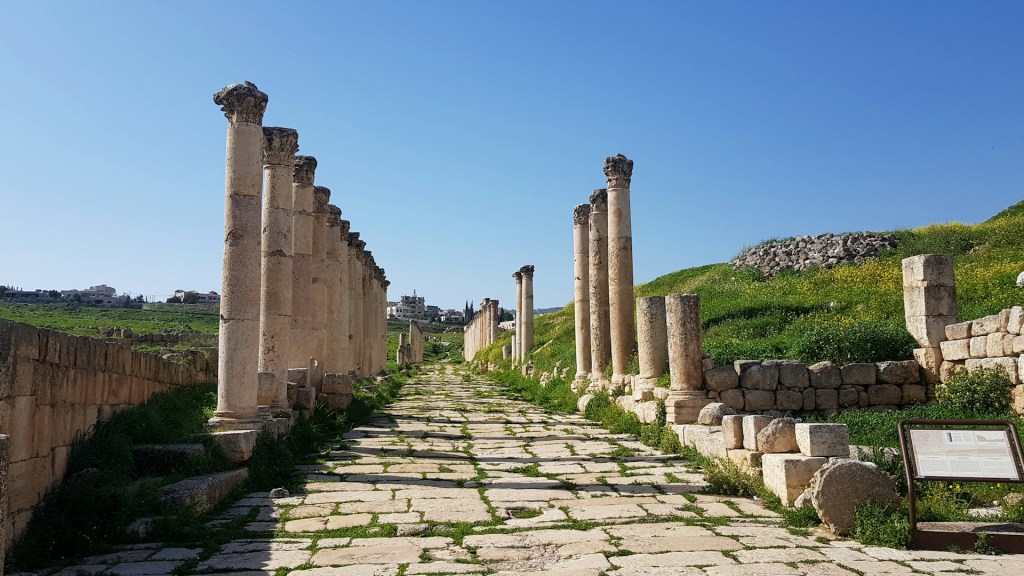
Photo by Matt Jones on Unsplash
“The impediment to action advances action. What stands in the way becomes the way.”
— Marcus Aurelius, Meditations, Book Five
You have seen this quote. It hangs framed in offices, opens keynotes, and anchors one of the best-selling leadership books of the past decade. Marcus Aurelius wrote it nearly two thousand years ago, and it has earned its circulation. It is clean, sharp, and it does something rare for a sentence: it converts adversity into agency.
In essence, the setback is not the end of the plan; it is the plan.
But the quote has been separated from its author in a way that should bother us more than it does. Marcus was not writing a book. He was writing private notes to himself – an emperor keeping his own conscience in order while carrying the weight of a plague that killed millions, a grinding war on the Danube frontier, and the food supply of a city of a million people.
The Meditations are not the journal of a man optimizing his mindset. They are the journal of a man trying to remain morally answerable while responsible for everything.
Modern leadership culture quotes him as a performance hack. It takes the discipline and leaves the duty.
And that substitution points to a harder possibility, one the quote itself never considers. Modern leadership culture usually casts the obstacle as external: the market, the workforce, the crisis, the disruption, or some combination thereof. But Marcus’s deeper warning cuts closer to the bone. Sometimes the obstacle is the leader’s own way.
To see how that happens, Rome is the right place to look, but not for the reason the keynotes think.
Let me be clear about the standard before we start: Rome was brutal, extractive, imperial, and slaveholding. Nothing that follows is written from nostalgia. The argument is narrower than admiration, and more damning for us. Even Rome – a civilization with none of our oft-stated values – understood something our leadership culture increasingly does not: power that intends to last must become material.
It must become grain, water, roads, and drilled competence. Everything else is theater.
The Emperor Who Built in Marble – and the Man Who Built the Sewers
Marcus is the emperor leadership culture quotes. Augustus is the one we should study.
Suetonius preserved the line everyone remembers: Augustus found Rome a city of brick and left it a city of marble. What almost no one quotes is the sentence’s real payload. Suetonius says Augustus made the city safe for the future “so far as human foresight could provide.”
Sit with that phrase. It is not about vision, disruption, or personal brand. It is foresight, made physical, on behalf of people who would live after him. That is as good a one-line definition of leadership as antiquity ever produced.
Augustus lived it in a way we can still audit, because he left us the receipts. The Res Gestae – the account of his reign that he ordered inscribed in bronze – is not primarily a record of conquest. It is, to a striking degree, an expense report. He records grain and cash distributions reaching more than a quarter-million citizens at a time. He records that when tax revenues fell short, he made distributions of grain and money from his own granary and his own purse.
The first emperor of Rome, given one chance to define his legacy in his own words, chose to itemize what he had spent on the people and the city.
The most revealing Augustan water story, though, belongs to Agrippa. Marcus Agrippa – Augustus’s second-in-command, the most capable operator in the empire, a man who had already commanded fleets and won Actium – took the aedileship, a junior magistracy far beneath his standing, specifically to overhaul Rome’s infrastructure. He repaired the aqueducts, built the Aqua Julia and later the Aqua Virgo, expanded the sewers, and by tradition inspected the Cloaca Maxima personally, traveling through the great drain by boat.
Note what that arrangement says. The most powerful man in the world kept his single best executive on water and sewage. Not as a punishment, but as a statement of what actually held the empire up.
From Augustus’s model, three obligations stand out – three disciplines that empire-building leadership knew, funded, and drilled.
Provision. Infrastructure. Logistics. Take them in turn, each with its modern mirror.
Provision Is Not Sentiment
Rome’s rulers were not humanitarians. That is precisely what makes their behavior instructive.
Under Augustus, the grain supply became an imperial administrative responsibility, eventually centered on the praefectus annonae: a senior official charged with the procurement, transport, storage, and distribution of Rome’s food supply. His office was backed by fleets, harbors, warehouses, and subsidies. None of this was charity in any sentimental sense.
It was legitimacy management, and the Romans were direct and unembarrassed about saying so. A hungry city is not loyal, and a neglected city is not stable.
The populus was not the audience for imperial power; it was the condition of imperial power, and every ruler who wanted to keep his position understood that the distinction was existential. Even cynical Rome, in other words, funded provision; it knew that the people who sustain the enterprise cannot be an afterthought of the enterprise.
Now hold that against the modern data.
Gallup’s most recent U.S. numbers put employee engagement at 31 percent, a ten-year low, with 17 percent of employees actively disengaged. Globally, engagement fell to 20 percent in 2025, the lowest since 2020 and the first two-year consecutive decline Gallup has recorded, at an estimated cost of some ten trillion dollars in lost productivity.
The sharpest number is buried below those headlines: in a single year, engagement among managers dropped from 27 percent to 22 percent. Managers are the load-bearing middle layer of every large organization. They are the people who translate strategy into provision, and who stand between the palace and the street.
And now, they are disengaging faster than anyone. The centurions are quitting in place.
This is what a provision failure looks like in an institution rather than a city. There is no riot, no visible collapse. The city still stands, but fewer and fewer of the people inside it believe in it. And the language of modern leadership hides the failure from itself, because a person becomes “a resource” only after leadership has already stopped seeing the city.
Roads Are Strategy Made Honest
The Roman road was never just a road. It was military reach, administrative coherence, trade, taxation, communication, and rescue. In short, the roads were the empire’s strategy made physical. A legion could reinforce a frontier because the road existed. An order from the capital meant something because the road existed. Grain reached cities because roads, ports, and depots existed and were maintained by people whose names history mostly forgot.
A road is a promise made in stone. It says: we intend to return here. We intend for people, goods, messages, and help to move without requiring heroism every time. That is what infrastructure is, when you remove the decoration and terminology – the replacement of repeated crisis with maintained possibility. And because it is physical, it is honest.
You cannot present your way out of a collapsed bridge. The road either holds weight or it does not, and everyone who travels it finds out which.
Every organization has roads, though they go by other names: data pipelines, documentation, staffing depth, onboarding, controls, maintenance windows, and institutional memory. And modern leadership has developed a reliable ritual for them: call them overhead until they fail, then call the failure a resilience opportunity. This is where the borrowed Stoic language turns obscene. The obstacle is not noble if it was built through neglect.
When the National Transportation Safety Board issued its final findings on the January 2024 door-plug blowout aboard a Boeing 737-9, the probable cause was not exotic. The board found that Boeing had failed to provide adequate “training, guidance and oversight” to its factory workers, and that the door plug had been reinstalled without required documentation, which meant no inspection of the work ever occurred. The regulator’s oversight of “repetitive and systemic” nonconformance was found ineffective as well.
Training. Guidance. Oversight. Records. The failure was not one missing part; it was a system whose maintenance obligations had grown too weak to reliably protect the people inside it.
If you want the thesis in numbers, it is this: between 2013 and 2019, Boeing spent $43.4 billion on share buybacks and $15.7 billion on commercial-airplane research and development. That does not prove a straight line from one boardroom decision to one missing inspection, but it does show the broader moral accounting: the roads had been repriced long before one of them visibly failed.
The Legion Was Logistics
Of all the Roman imagery leadership culture borrows, the legion is perhaps the most abused. The conference version is a warrior story: discipline, grit, and tougher men.
The historical version, though, is both far more interesting and far more useful.
The legion was feared not because its soldiers were stronger than their enemies – often they were not – but because Rome had made competence repeatable. They used standardized equipment. They were supported by professional supply trains. They marched on roads built by the soldiers themselves.
And the detail that should humble every modern operations leader: at the end of every marching day on campaign, Roman troops built a fortified camp to a drilled, standardized plan – ditch, rampart, gates, streets, headquarters, all in the same place every time, thousands of times, across three continents. Rome did not ask its soldiers to rediscover civilization at the end of each march. It drilled the shape of the camp into muscle memory.
The legion was the hand of Rome. The architects and logisticians were the arm. Their competence was not charisma; it was operational memory, and Rome invested in memory the way lesser powers invested in speeches.
Now, again, the modern mirror. In July 2024, a single faulty content update from CrowdStrike disabled roughly 8.5 million Windows devices. By Microsoft’s estimate, that was less than one percent of Windows machines. Still, it grounded airlines, halted hospital systems, and froze banks across the world, because those particular machines ran critical services.
Some organizations recovered within hours. Many more discovered that their recovery discipline had never been drilled to match their dependency. There were documents. There was no camp discipline.
Thousands of enterprises had built a single road and posted no engineers along it. When the road failed, there was no legion – just millions of individuals, improvising. (The same year, a cyberattack on Change Healthcare, entering through a single server that lacked multifactor authentication, disrupted claims and payments across the U.S. health system. One server; one road.)
The lesson of the legion was never that people should be tougher. It is that ordinary people become formidable when the system around them is designed to make competence repeatable, and that no amount of individual excellence survives the absence of that system for long.
Why the Roads Fail
It would be easy to stop here and call this a failure of character; to say that modern leaders are vainer or softer than Roman ones. That would be satisfying, and it would be wrong. Roman elites were at least as vain as ours. The difference is not virtue. It is time.
Augustus held power for over forty years, and his name was carved into the works he built. Roman aristocrats competed for status by building durable public goods: roads, baths, or aqueducts bearing their family names for centuries. Their vanity and their stewardship pointed in the same direction, because they expected to be present, and remembered, when the investment matured.
The modern executive horizon is shorter than the institutional horizon. Spencer Stuart’s 2025 transition data found that 37 percent of departing S&P 500 CEOs left by the five-year mark, while Equilar reports a 4.8-year median tenure. A road – whether a data platform, a trained workforce, a maintenance culture, or a documentation habit – often pays back over decades.
Stewardship is the one investment whose returns reliably outlive the leader’s tenure. Under modern incentives, that often makes it the first thing cut and the last thing credited. The executive who defers maintenance books the savings personally, knowing the failure will arrive on someone else’s watch, filed under bad luck.
To be very clear, this is not primarily an indictment of individuals. Instead, it is an indictment of an incentive structure that systematically selects against the behaviors that made every durable institution in history durable. Rome’s rulers maintained the roads because they expected to still be standing on them. We have built a leadership culture that plans to be gone before the potholes form.
But structures are made of choices, and history preserved an unusually clear picture of what happens when a leader stops choosing stewardship altogether.
The Palace View
Marcus Aurelius left modern leadership culture a quote. He left Rome Commodus.
That sentence is brutal, but it is fair. Honesty, though, requires sitting with what it means.
The philosopher-emperor, the man our keynotes canonize, committed the very failure this essay describes, in its most consequential form. For nearly a century, Rome’s most successful emperors had chosen their successors by adoption, selecting for competence. Marcus broke the pattern and handed the empire to his nineteen-year-old son. Succession is stewardship, if the final and hardest form of it, and the best steward of his age failed at exactly the obligation that outlived him. If it could happen to Marcus, no leader gets to assume it cannot happen to them.
A caveat before the portrait: the ancient sources on Commodus are blatantly hostile, and no emperor should be reduced to a meme. But as an image of failed stewardship, he has endured for eighteen centuries for a reason.
Commodus inherited the machinery of empire – the grain fleets, the roads, the legions, the administrative depth built by a century of careful men – and treated it as a stage. He left governance to a series of favorites and devoted himself to performance: fighting in the arena as a gladiator, styling himself the reincarnation of Hercules, renaming the months of the calendar after his own titles, and eventually renaming Rome itself Colonia Commodiana – the Colony of Commodus.
He did not neglect the brand. He became the brand. And the machinery, unmaintained, did what unmaintained machinery does.
In the year 190, the grain supply faltered under his favorite Cleander, and a hungry mob rose in the Circus Maximus and marched on the emperor’s estate. Commodus’s response is the whole story in miniature: he did not fix the system. He had Cleander executed and handed to the crowd. A performance of accountability, in place of the practice of it – the ancient ancestor of every leadership team that fires a scapegoat and calls the problem solved.
Two years later Commodus was assassinated, and within months Rome was consumed by civil war. There were five emperors that year. Cassius Dio, a senator who lived through the transition, wrote the epitaph for the era: Rome had descended from a kingdom of gold to one of iron and rust.
Notice the sequence, because it is the same one every time: Provision becomes spectacle. Infrastructure becomes backdrop. Logistics becomes someone else’s problem. The leader becomes the empire’s main character.
The danger for the modern executive is not becoming Commodus; almost no one does so. The danger is subtler, and far more common: learning to prefer the palace view.
Measuring the enterprise by the quality of the banquet, the applause in the room, the confidence of the inner circle, the smoothness of the presentation, or the beauty of the marble, while the roads crack, the grain thins, the records rot, the managers disengage, and the institution quietly forgets how to carry weight.
From inside the palace, the empire always looks fine. That is what palaces are for.
Marcus was right that the obstacle can become the way. But history has shown that the inversion is also true, and it is the one our leadership culture needs carved on the wall next to the quote:
The way becomes the obstacle when leadership mistakes the symbols of power for the duties that sustain it. Rome did not endure because men called themselves emperors. It endured while someone remembered to maintain the roads.



 Abstract Foundations
Leave a comment