
Category: Management
-
The Shape of Command

Photo by Austin on Unsplash Newton did not begin with equations. He began with a more irritating problem: something in the world was clearly shaping motion, but the thing itself could not always be seen. An object resisted acceleration, and from that resistance mass had to be inferred. A body remained at rest, or stayed…
-
The Fractal Delusion: Why Motion Isn’t Proof

From the road, it looks like progress. A project site at full stride has a particular kind of confidence to it. Steel ribs climb into the sky. Concrete trucks arrive on schedule. Cranes swing slow, deliberate arcs, placing beams where they belong as if the building is assembling itself. You can stand at the fence…
-
Leased Understanding

Photo by Casey Lovegrove on Unsplash Author’s note: Two objections are worth granting upfront. First: renting competence can be optimal. Not everything should be rebuilt internally, and not every organization can afford deep expertise in every domain. The point here isn’t “never outsource.” It’s: don’t outsource comprehension for systems you’re accountable for. Second: internal teams…
-
The Space Between Slop and Solutions

Photo by John Cardamone on Unsplash In early 2026, a meme started making the rounds with surprising traction: Microslop. It began as a riff on “AI slop”; Merriam-Webster’s 2025 Word of the Year, coined to describe the deluge of low-effort, AI-generated content saturating digital platforms. Within days, Microslop had become shorthand for growing public frustration…
-
Your Infrastructure Is Lying to You
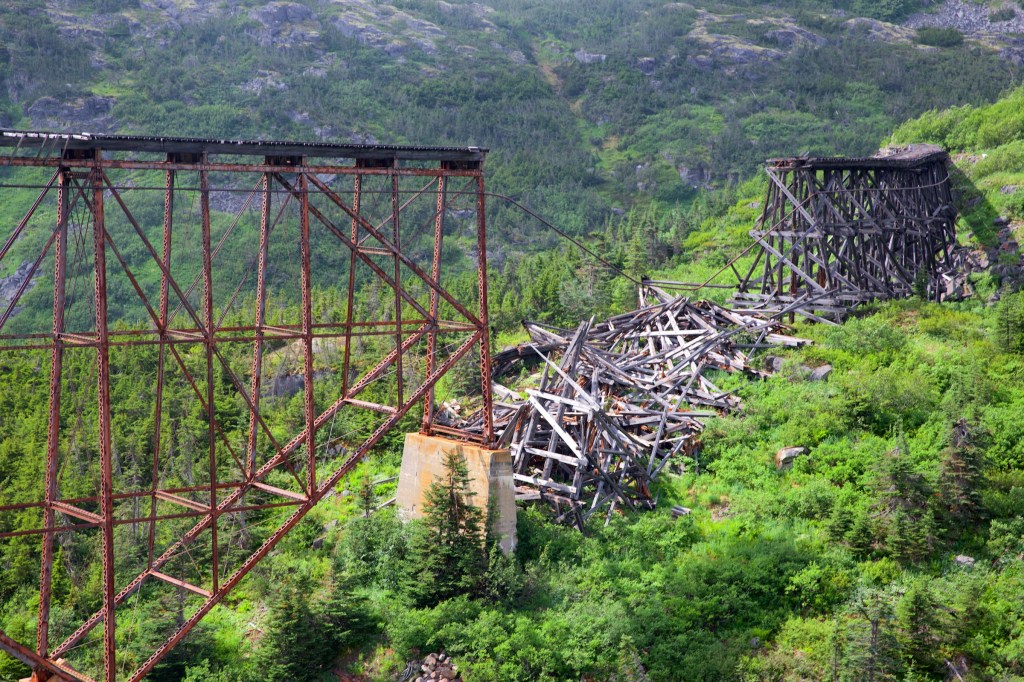
Photo by Brian Kelly on Unsplash Every company that grows quickly builds roads to connect where they are with where they want to go. At first, those roads are simple: gravel tracks carved out of necessity, meant to get people and goods moving with minimal delay. They’re not elegant, but they’re fast. They serve their…
-
The Cost of Ownership

Photo by nikko macaspac on Unsplash Author’s Note This piece may come across sharper than most. Perhaps that’s intentional—but the intent is not unkind. The goal here is not to condemn managers, critique peers, or cast blame on systems that evolved in the absence of reflection. Rather, it’s to illuminate a pattern that often remains invisible until it’s…
-
Inside the Lines, Outside the Truth

Photo by Joyce Romero on Unsplash Author’s Note The opening story in this piece is fictional—but it’s not invented. It draws from publicly available reporting, court documents, and personal accounts related to the Purdue Pharma case and the wider opioid crisis. The names, moments, and characters have been fictionalized, but the architecture of the story—how…
-
Bridges, Not Walls: The Strategic Value of Operational Transparency

Photo by Denis Panfilov on Unsplash Title note: This piece is about organizational transparency and cross‑functional translation. The title comes from an internal tool I built (“Bridges, Not Barriers”), not from any current political event or protest. Lighting the Valley—How Transparency Built a Revolution The first lightbulb flickered to life in a Tennessee farmhouse in…
-
The Changing of the Tides: Navigating Work in the Age of AI and Erosion

Photo by Samuel Scrimshaw on Unsplash A Rising Undertow Last spring, the National Association of Business Economics surveyed 600 hiring managers and came back with a jaw‑dropper: more than half said applicants “couldn’t summarize a one‑page memo without AI help.” In the very same quarter, ChatGPT crossed a billion monthly users. If you picture modern…
-
The Convenience Trap: Why Borrowed Solutions Build Fragile Companies

Author’s Note Every time I teach someone to automate a daily task — or pitch a simple tool that quietly saves an hour a week — the same question always comes up: “Why should we spend hours or days building something that only saves minutes or hours?” I see the same question through a different…
 Abstract Foundations