
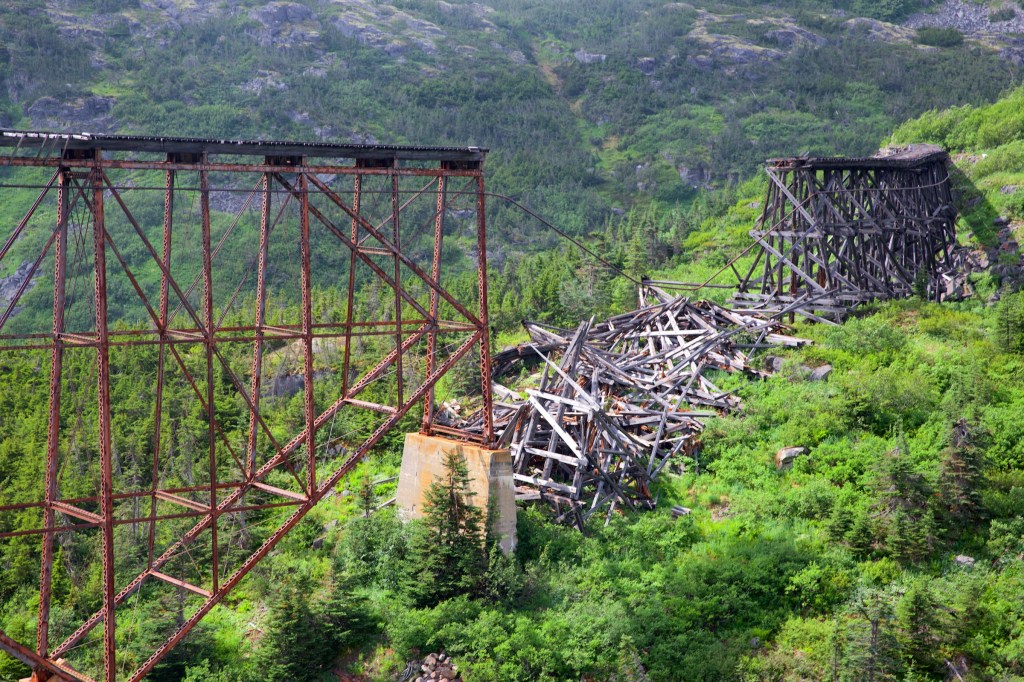
Photo by Brian Kelly on Unsplash
Author’s Note:
This piece is for leaders who have ever looked at a stalled initiative and thought, “Why is this taking so long?”—without realizing the system under it was never built to scale in the first place.
It’s not about blaming early decisions or pretending growing pains are a sign of maturity. It’s about recognizing when the infrastructure that got you here is no longer capable of getting you there; and having the courage (and the support) to do something about it.
TL;DR:
- Growth often prioritizes speed over structure. That’s normal.
- Shortcuts become permanent faster than anyone admits.
- Leaders miss technical debt because systems don’t show fatigue the way people do, until it’s too late.
- Your road might still be moving traffic, but if it was built for less weight, it’s only a matter of time.
- If you’re not listening to your engineers, you’re guessing.
- If your strategy rests on guesses, it’s already fragile.
Not all leaders should become technical, but they should understand the value of systems that make progress possible, and the people who keep them running.
~Dom
Every company that grows quickly builds roads to connect where they are with where they want to go.
At first, those roads are simple: gravel tracks carved out of necessity, meant to get people and goods moving with minimal delay. They’re not elegant, but they’re fast. They serve their purpose.
In the world of data and reporting, those roads often take the form of pragmatic decisions that prioritize adoption over architecture. You pick what’s available, what integrates with what you already have, and what gets people using the system today—not in three years. For many organizations, that meant leaning into tools like Power BI, Tableau, and other visualization tools. They begin by leveraging what was already familiar and secure, and building a reporting ecosystem that solved immediate problems without demanding a total rebuild of everything underneath.
At the beginning, this makes perfect sense. Your first dashboards provide visibility that never existed before. Your sales teams, your finance leaders, your executives; all of them can suddenly see, in near real time, what’s happening across the business. The road works. Traffic moves. Growth accelerates.
But with every new expansion—another ERP, another region, another product line, another process to monitor—you don’t stop to lay down new foundations. Instead, you bolt on another lane, patch another crack, reroute a section around an obstacle. The road becomes longer, heavier, more complex. And while it still carries the traffic, it also carries invisible fractures. Cracks that multiply under the weight of every new demand.
Eventually, the road itself becomes the barrier. What once sped you forward now slows you down. What once empowered your teams now consumes their energy. And the leaders who thought the road was finished learn too late that it was never designed to bear the load they’ve placed upon it.
How Growth Happens
In the early stages of growth—whether it’s a new company, a new product line, a new process, or the adoption of new tools—the objective is simple: survive, compete, and expand. Organizations make pragmatic choices that prioritize speed over structure because the immediate return is obvious—faster delivery, new customers, fresh visibility, or the ability to prove value quickly. The systems put in place during these times are designed to accelerate momentum, not endure years of change and growth.
This is natural. New initiatives thrive on experimentation and agility. The fastest way to prove value is to implement tools that unlock insights quickly and connect teams without demanding large upfront investment. Early dashboards, processes, and reports feel transformative, offering clarity that didn’t exist before. Leaders (quite literally) see results. Teams adapt around what’s available. The business moves forward.
In this phase, technical debt doesn’t feel like debt at all. It feels like progress. Each shortcut is justified as a tradeoff against risk, cash flow, or competition. Decisions are made with the implicit assumption that “we’ll fix it later,” but later rarely arrives. Instead, those temporary structures become the permanent foundation of how the organization operates.
Growth, in other words, obscures fragility. As long as outcomes are improving, it’s easy to mistake a patchwork system for a stable one. By the time cracks begin to show, the organization is already relying on those shortcuts as if they were built to last.
When Technical Debt Becomes a Barrier
At first, the cracks are invisible. A ‘simple’ request takes a little longer than it should. A change in one area unexpectedly breaks something in another. The team adapts, patching the problems and moving on, but the cracks are multiplying beneath the surface.
Every new initiative now takes longer than the last. What once felt nimble begins to feel sluggish. Every change becomes fragile, every improvement weighed down by hidden dependencies. The scaffolding that once held up growth now groans under its own weight.
Instead of fueling innovation, systems begin to siphon energy into maintenance. Highly skilled people spend more time untangling yesterday’s shortcuts than building tomorrow’s solutions. Leaders notice the delays but often mistake them for growing pains rather than structural problems.
The real cost, though, isn’t just measured in wasted effort. It’s measured in opportunity. While the organization struggles to make the old foundation hold together, the market keeps moving. Competitors experiment, adapt, and capture ground. Customers grow impatient. By the time the cracks can no longer be ignored, the organization realizes it isn’t just slowing down, it’s falling behind.
Why Leaders Miss It
Most leaders are fluent in human processes. They understand how people adapt, improvise, and find shortcuts without collapse. In human systems, flexibility often emerges naturally: teams cover each other’s weaknesses, relationships carry projects through obstacles, and outcomes are achieved even when processes aren’t perfect.
This outlook is reinforced by traditional management backgrounds, business relationships, and deal-making. These are almost always outcomes-focused rather than process-bound. If the partnership delivers results, the details of how it got there are secondary. This perspective rewards improvisation and quick wins, not the unseen maintenance that keeps a system stable.
Technical systems, however, don’t have this luxury. They don’t adapt unless someone engineers the adaptation. They don’t compensate for missing steps unless those steps are explicitly built. Where people can fill gaps with ingenuity, systems expose gaps as failures. What seems “finished” from the outside is, in truth, only sustainable through constant upkeep.
Here lies the disconnect. Managers often view a completed project as “done”; a milestone passed, an outcome delivered. But technologists see it differently: every project is infrastructure. Like a bridge or a power grid, it requires ongoing care, reinforcement, and expansion if it’s going to last. A deal that closes once is not the same as a system that must run flawlessly the next million times. Without this distinction, leaders unintentionally neglect the most fragile part of their foundation: the very systems their growth depends on.
The Breaking Point
Unchecked technical debt acts like a glass ceiling for innovation.
Growth curves flatten, not because the market has dried up or the strategy has failed, but because the infrastructure can no longer keep pace with ambition.
At this stage, every new idea feels heavier than it should. A simple enhancement demands weeks of untangling. A new product line requires reworking old integrations that no one dares touch. What once was a source of competitive advantage can become the very thing holding the company back.
Consider the story of a company that launches fast and dominates its niche. For a few years, speed is its hallmark—ideas become products almost overnight, and competitors struggle to keep up. But five years in, every small change takes months. Releases stall. Customers notice. Competitors pass them not because they have better ideas, but because they have the freedom to act while the first company wrestles with its own weight.
The tragedy of the breaking point is that it rarely arrives with a single catastrophic failure. Instead, it emerges through a thousand small delays, each one quietly chipping away at the company’s ability to move. By the time leadership recognizes the ceiling, it isn’t just the systems that are strained—it’s the people who depend on them.
Teams begin to feel the squeeze most acutely. Engineers and analysts who once joined to build and innovate now find themselves stuck maintaining brittle systems, patching problems that leadership never sees, and absorbing the frustration of delayed projects. The lack of recognition for this invisible labor compounds the burden. Leaders rarely celebrate what doesn’t break, yet stability itself requires enormous effort. Without prioritization or support, burnout creeps in, morale erodes, and the very people capable of fixing the problem begin to leave. What remains is a cycle of decline: fragile systems, exhausted teams, and leaders puzzled at why execution falters even when the strategy seems sound.
A Reminder to Leaders
Most business leaders don’t recognize technical debt when they see it. And why would they? Their strengths lie in shaping strategy, closing deals, and leading people, not in deciphering the brittle scaffolding holding their systems together. But the blind spot doesn’t make the problem go away. It just delays the fallout.
To many leaders, systems are like roads: once built, they’re expected to work. You pave it, you drive on it, and you keep going. But not all roads are equal. Some are reinforced for decades of heavy traffic. Others are gravel paths laid quickly, meant for light use and short-term gain.
The problem isn’t in using quick fixes when speed is essential; it’s in forgetting what they were. Over time, those temporary structures become so embedded in operations that they’re mistaken for permanent infrastructure. Until they fail.
That’s why technical voices must be present—and heard. Engineers, architects, analysts: they’re the ones who know whether you’re building on concrete or duct tape. Ignoring them isn’t just risky, it’s negligent.
Being unaware is forgivable. Staying unaware is a decision.
This isn’t a call for every executive to become an expert in systems architecture. It is a call to understand that every strategy depends on systems you may never see, and that those systems require care, funding, and uncomfortable conversations.
The leaders who internalize this don’t just avoid fragility, they earn the trust of the people maintaining the foundation. The ones who don’t? They build their future on infrastructure that was never meant to hold it.
Choosing to Reinforce the Road
In the opening story, we built roads—quick, pragmatic paths meant to move the business forward. But as traffic grew, those roads revealed their limits. Leaders often balk at the cost of rebuilding or re-architecting, calling it unpleasant or disruptive. Yet it is far less costly than the alternative: watching growth stall, talent drain away, and opportunities pass by because the road can no longer bear the load.
Unchecked technical debt doesn’t just slow progress—it diverts resources from building new roads to patching old ones, and sometimes even blocks the very paths it was meant to create.
It slows innovation, erodes trust, and burns out the very people capable of building the infrastructure that progress depends on. Leaders miss it not out of malice, but because their attention is trained elsewhere. But oversight does not excuse impact.
The reminder is simple: your strategies, partnerships, and visions all depend on technical foundations that aren’t immediately apparent in project meetings or update calls. Those foundations require care. Sometimes, that means paying the bill for re-architecture, because necessity trumps convenience.
The work of leadership is not just to set direction, but to ensure the road beneath your organization can carry you there. Sometimes it means greenlighting an overhaul before the system breaks. Or choosing to refactor instead of chasing another feature release. Not because it’s urgent NOW, but because it’s essential to the future.
It requires a fundamental shift from ‘What can we get done fastest?’ to ‘What can we build to last?’
In the end, sustainable growth is not just a matter of vision, speed, or agility. Endurance comes from strong foundations, not just speed. The leaders who recognize this truth will find their organizations moving forward freely, while others remain trapped by the weight of the shortcuts they once mistook for progress.



 Abstract Foundations
Leave a reply to Dianne Tucker Cancel reply