

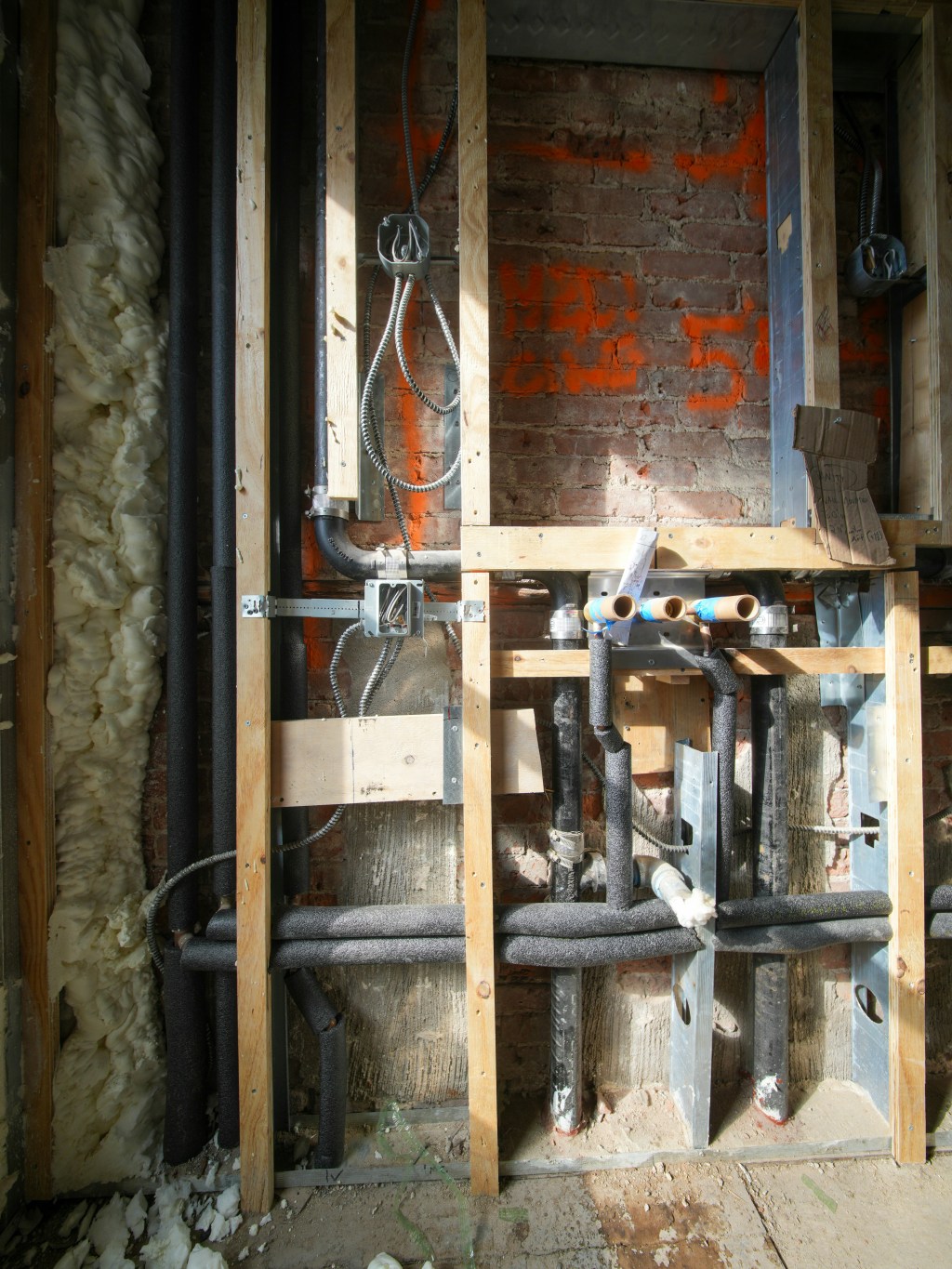
Photo by Alexas_Fotos on Unsplash
This week, Aria stands still, for once.
Not frozen, not halted, just still. The logs report cleanly, get flagged as needed. Every process hums quietly, every function loops without friction, and for the first time since the project began, there is equilibrium. The chat loop works, the infrastructure responds, the memory persists. She learns, she retrieves, she acts. But for today, at least, she will not grow.
By most definitions, Aria is already an agentic system. Every morning she checks for new articles across both of my sites—Abstract Foundations and Masquerade & Madness—ingesting and embedding new essays into her Qdrant corpus. She runs on independent hardware: Docker containers on a headless Ubuntu server, orchestrated through compose, and a Windows workstation that serves as her ollama host. Her tools communicate through a custom MCP server, routing decisions between memory, action, and analysis. She reads from and writes to multiple data sources. She can reason, recall, and respond with context.
By any current AI operations benchmark, that makes her an agent. And yet, I’m not working on new capabilities this weekend.
For the first time since this project began, I’m taking a deliberate pause. I’m evaluating, not just what to build next, but why to build it. Which tools are worth integrating? Which capabilities will extend Aria’s intelligence versus simply decorate it? Where does function end and noise begin?
That question crystallized when I re-read an MIT report titled, “95% of Generative AI Pilots at Companies Are Failing.” The findings were striking not for their novelty, but for their clarity: most AI projects fail not because of model quality, but because of intent. Companies are integrating AI for its own sake, chasing headlines in place of solutions. Out of hundreds of corporate initiatives, only 5% yielded measurable business impact. The rest stalled under the weight of poor alignment, shallow integration, and lack of contextual learning.
At this point, It’s not the intelligence that’s missing. It’s the architecture.
I’ve spoken often about AI’s potential and its limitations. I keep close watch on emerging design patterns, new frameworks, and shifting paradigms in how humans and machines cooperate. But this report drove home something I’ve felt intuitively for months: AI must never become its own justification. Tools, no matter how powerful, only create value when they are directed toward purpose. That is as true for a corporate deployment as it is for a personal project like Aria.
The temptation in moments of stability is expansion. To add, connect, enhance, automate. But autonomy without alignment risks drift. As I consider Aria’s next phase—new endpoints, task types, and learning pathways—I find myself weighing not just the mechanics of implementation, but the meaning behind it and the value that each addition would generate. This intermission is not a pause in progress; it is an act of design. A moment to choose direction before momentum returns.
The MIT report ended on an interesting note: the few organizations finding success with AI are those treating it not as a product, but as a system. One that learns, remembers, and acts within boundaries. In other words, the most successful agents thus far are those with a defined purpose.
So it is with Aria. But the next question isn’t whether she can act. It’s whether she should, and under what structure that action remains aligned with intent.
The AI Marketplace
The AI marketplace today feels like a festival of promises. Agents are marketed as productivity magic; digital colleagues capable of handling everything from research to scheduling to decision-making. They are packaged as enterprise revolutions and sold as the cure for inefficiency, the corporate strategy equivalent of a Stanley cup trophy: something every executive wants to be seen holding.
This frenzy has benefits. It keeps the market alive, investment flowing, and research accelerating. But beneath the hype lies a familiar truth, one echoed in the MIT study and consistent with my own observations: AI is a tool, not a solution.
A well-designed agent can amplify human capability, accelerate analysis, or execute rules with near-perfect consistency. It can reduce manual intervention in stable, well-defined processes. Yet, without architectural specificity, without the system around it to define context, measure output, and constrain risk, an agent is little more than a large file, or several slightly smaller ones, sitting on a server and consuming GPU cycles.
Tools derive meaning only from the problems they are shaped to solve. The marketplace sells potential; architecture determines value.
And this is the part most often skipped: architecture. Not just a clean UI or a workflow integration, but the system-level thinking that defines how decisions are made, how context is preserved, how failure is handled, and how outcomes are measured. The most successful AI deployments aren’t flashy. They’re deeply embedded. They act within a framework: input, validation, action, consequence.
Without that, an “agent” is just a misnamed chatbot running in a vacuum, capable of answering but incapable of understanding why the answer matters.
In practice, this distinction is being lost. Many of the tools now labeled as “AI agents” are thin wrappers around language models, marketed as self-sufficient but relying entirely on the user to define scope, context, and success criteria. They function well as assistants, but they do not yet qualify as autonomous systems. Their intelligence is derivative, not emergent. Their decision-making is constrained by prompts, not guided by awareness, context, or memory.
Marketing narratives promise a seamless future: automated workflows, context-aware companions, adaptive reasoning across business domains. Yet most of these agents, when deployed, face the same limits that doomed early machine learning implementations: they lack integration. They exist apart from the data architecture, process logic, and governance layers that make complex systems sustainable and safe. And without these, their brilliance burns briefly and then fades.
The cycle repeats: investment surges, pilots proliferate, and dashboards fill with new metrics. But the most meaningful implementations are quiet, the ones that replace inefficiency with insight rather than spectacle. The next generation of agentic AI will need less flash and more framework: models embedded within cohesive architectures that define purpose, context, and consequence. Systems that understand why they are acting, not merely how.
That same lesson applies even at the personal scale. Aria may run on my own hardware, but the same architectural discipline applies: no integration, no impact. For myself and Project Aria, this is a reminder of restraint’s value. The goal is not, and should rarely be, to add every new capability that appears on the horizon. Instead, my job is to determine which of those new possibilities align with her core design principle: meaningful autonomy grounded in structure.
In a market chasing novelty, discernment becomes its own form of progress. After all, architecture isn’t optional. It’s the difference between an agent and an accident.
The Reality of Success
When you strip away the marketing language and look at what actually works, a clear pattern emerges. The most successful AI systems are not the ones that promise general intelligence or sweeping automation. They are the ones that do something specific reliably, repeatably, and within defined boundaries. Their advantage is precision, not omniscience.
They thrive in structured environments where objectives are measurable, risks are contained, and feedback loops are constant.
In these cases, AI increases flexibility and speed. It can test more scenarios, adapt to variable inputs, and identify correlations faster than human teams ever could. But this flexibility comes at a cost: it must be fenced in. Every successful implementation rests on a balance between adaptability and constraint. The tighter the operational guardrails – the defined data scope, the validation processes, the human checkpoints – the more stable the output becomes.
This is where compliance meets capability. Because no one truly understands how a large neural network reaches a given conclusion, certainty is impossible. What remains is probability. Confidence intervals built on testing and validation. In practical terms, the best we can do is confirm that a system behaves predictably within its designed context. As long as that understanding stays in the room, it’s not a weakness; it’s the foundation of safe deployment. Without rigorous testing and governance, autonomy becomes improvisation.
Even enterprise-grade systems marketed as low-risk automation, those integrated into productivity suites and workflow tools, suffer from the same blind spots. They rarely expose the granular configuration controls that matter most: temperature, system prompts, custom validation chains, or decision logging. Without these, users are left trusting the model’s behavior rather than verifying it. For regulated industries, that’s not a leap of faith; it’s a potential compliance failure.
Recent security research underscores this risk. At DEF CON, researchers demonstrated that AI assistants embedded in corporate environments could be manipulated through data voids and trust exploits, hijacking internal authority to execute malicious commands. These aren’t hypothetical vulnerabilities, they were demonstrated, on stage, at a public security conference. Further, they’re symptoms of a deeper issue: we’ve built systems that can act, but not yet systems that understand why they act, or when to stop.
As a reminder, the lesson here is not to fear autonomy, but to frame it properly, and account for weaknesses in the architectural plans. Successful AI solutions don’t eliminate uncertainty; they operationalize it. They combine adaptive models with deterministic safeguards. They put humans, or other verifiers, in the loop where context or consequence demand accountability. And above all, they treat intelligence as a collaborator within the architecture, not as the architecture itself.
In that light, my current pause is more a sign of prudence than hesitation. The next steps are not about reaching further, but about building firmer foundations. True intelligence isn’t the absence of limits. It’s the understanding of why they exist.
How to Think About AI
The MIT study offers more than caution, it offers a lens. It reminds us that AI’s success doesn’t hinge on the newest model or the most creative prompt, but on the clarity of purpose that shapes its use. To make AI truly successful, we must stop treating it as a deterministic oracle and start viewing it as a probabilistic collaborator.
AI doesn’t replace human judgment; it extends it. It operates best when architecture and intent define its boundaries; when it has context, feedback, and alignment with measurable outcomes. This means designing systems that are transparent enough to audit, structured enough to predict, and flexible enough to learn.
The organizations succeeding today approach AI as part of their decision fabric rather than as a bolt-on enhancement. They define what success looks like before deployment, ensure data governance and validation are in place, and continuously test outputs against real-world feedback. They treat drift as a certainty, not a failure.
In short, success comes from architecture, alignment, and accountability.
Build AI to serve a purpose, embed it in systems that can constrain and interpret it, and ensure humans remain in the loop—not to override, but to contextualize.
For projects like my own, this perspective is grounding. It reinforces that capability without intent is little more than noise, and that every new tool should serve a purpose, not just add complexity. AI succeeds not when it replaces us, but when it helps us understand more, decide faster, and act with purpose.
Choosing the Next Step
Every architect eventually faces a moment when the design demands reflection more than motion. For Aria, this is that moment. The possibilities are endless—new endpoints, new senses, new ways of seeing and speaking—but every addition carries cost, both technical and philosophical.
There are practical choices ahead. I could extend her reach by connecting new endpoints—email, Telegram, Slack—and let her act as a true cross-system liaison. I could broaden her insight by building a document indexer and search layer, enabling vector retrieval and link-based payload parsing for contextual recall. Or I could refine the human interface: adding voice input, text-to-speech, and more intuitive ways to interact. Each path represents a different philosophy of growth: expansion, depth, or accessibility.
But before any decision, there must be clarity. What do I value in this system? Is Aria meant to serve as an assistant, a partner, a prototype of something larger? Each answer reshapes the architecture.
The MIT report made this much clear: the difference between success and stagnation lies in intent. Every effective AI system begins with a defined purpose, bounded by structure, and sustained through feedback. Those that fail often do so not from lack of capability, but from lack of alignment.
That’s where Aria’s own design reflects broader lessons in enterprise-scale AI. Her trajectory, like any responsible deployment, rests on four architectural pillars:
- Strategic Alignment: a clear sense of purpose, and a measured response to the question, “Should this exist?”
- Technical Foundation: infrastructure that’s resilient, observable, and built to evolve without unraveling.
- Governance: rules, prompts, and fallback logic that create accountability without paralyzing progress.
- Organizational Readiness: (in this case, mine) the time, discipline, and clarity of judgment to shape her growth responsibly.
Perhaps the next version of Aria is one that listens more deeply, to the news or to data. Perhaps she connects more broadly. Or perhaps she turns inward, learning to better index and recall what she already knows. Each option extends the system in a different direction, but none of them should proceed without those pillars in place.
Because in the end, this intermission is about more than software. It’s about stewardship.
The same principle that governs successful AI governs its creator: progress without reflection is just acceleration. And architecture, whether personal or organizational, is the scaffolding that holds both direction and purpose in place.
The measure of success isn’t what Aria can do. It’s what she should do… and whether, in doing it, she remains aligned with the intent that made her worth building in the first place.




 Abstract Foundations
Leave a comment