
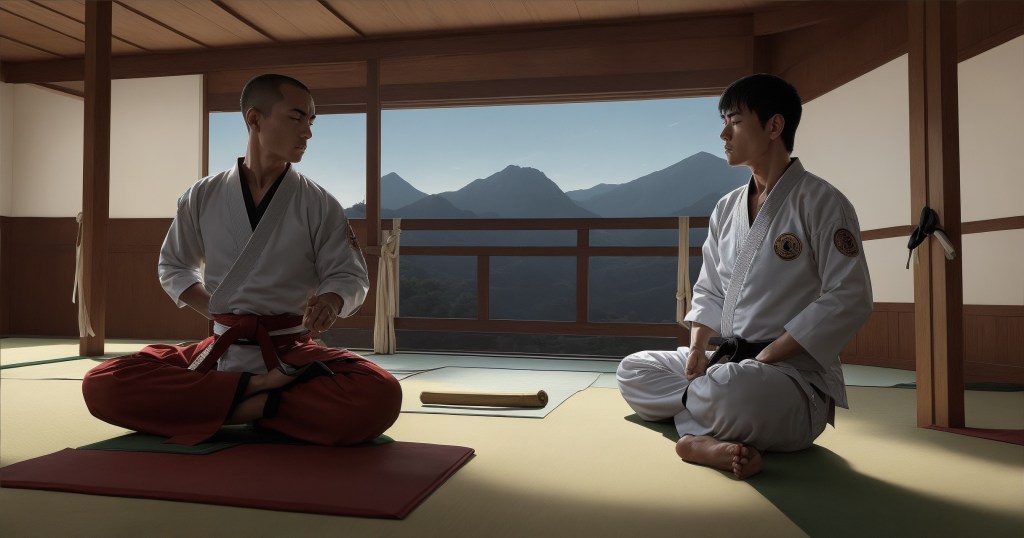
The alarm from the utilitarian clock in your bedroom blares, jolting you awake. Blinking the sleep from your eyes, you glance over, noting the time – 0545. For a moment, you hear your father snoring at the other end of the double-wide before the overworked air conditioning unit rumbles to life. You’ve often wondered whether his move to the second shift was a choice made to minimize the time he had to be around you or if it was the only option available. Either way, you seldom see him, and after nights like the last, a guilty part of you is somewhat relieved.
He’d come home to a house smelling of cigarettes (again), and must’ve had a bad day because instead of his usual yelling, this time your head left an impression in the wall behind your bed. There’s a dark humor in knowing that both you and the wall will likely remember the incident longer than he will. But it’s too early for such thoughts.
Silently, you roll out of bed – you’ve become adept at navigating the morning without making noise. Despite the throbbing in your head, you begin a quick series of stretches and calisthenics. After all, you can’t afford to miss the bus at the end of the road; the driver, though kind, isn’t one for waiting. School passes in a blur, unremarkable and forgettable. But after school, your routine changes – you get off the bus at your grandmother’s house, walking up the long driveway through the woods to prepare for your Tae Kwon Do class.
Years ago, your grandmother had suggested these classes as a ‘healthy’ way to manage your anger. Though you’ve found yourself intimately familiar with the mat on more than one occasion, you now take pride in teaching a few lessons of your own. It’s not just enjoyable – it also helps trim the tuition cost enough to make it affordable. It’s a cool hobby, and it’s taught you a lot about yourself, though the full extent of these lessons won’t be apparent for years.
While I often kickstart these articles with a narrative (they’re a delight to write), this one cuts close to the bone because the teenager in the story above was me. I spent the bulk of my youth grappling with anger, isolated from my peers by the ‘gifted’ class divide prevalent in the ’90s. A fallout with my mom’s partner — her wife? The details blur — spurred my flight south, seeking solace with my father. I rarely indulge in reminiscing about my youth, but the memories that shine through are cloaked in a crisp white uniform, set against the backdrop of repurposed wrestling and gymnastic mats in a modest Tae Kwon Do school nestled in a local strip mall. It’s there, in that microcosm of discipline and sweat, that I absorbed lessons of immeasurable value — lessons that have shaped my ethos and that I’m eager to impart in this piece.
Recommended Listening:
Respect – The Foundation of Leadership and Growth
In the disciplined world of traditional martial arts, the symbolism of the belt is both revered and humbling. In my dojo, we were always encouraged to train with a white belt, irrespective of our actual rank. This practice was rooted in a poignant tradition: the original ‘black belt’ was said to have started off white, gradually darkening with years of hard work, sweat, and dedication. The symbolism is powerful; it’s not about the destination of ‘being a black belt’ but about honoring the journey it takes to get there.
On the mat, the color of our belts became secondary. We were equals, united by a shared pursuit of mastery and self-improvement. This environment cultivated a deep sense of mutual respect, transcending social status, academic achievement, or economic background. It taught us that respect wasn’t a commodity to be earned by accomplishments alone but a fundamental right accorded to each individual embarking on the journey of growth.
In the business world, this principle of respect as a foundational value is equally critical. Leadership and team dynamics thrive in an environment where respect is both given freely and earned through actions. Just as a white belt signifies a fresh start and equal footing in a dojo, every member of a team, regardless of their position or tenure, should feel valued and respected. This culture of respect fosters open communication, encourages risk-taking, and empowers individuals to contribute their best work.
Moreover, by treating respect as an intrinsic value rather than a privilege, leaders can cultivate a more inclusive and collaborative workplace. This approach encourages employees to focus on their own ‘journey’ — their personal and professional development — rather than merely striving for the next ‘belt’ or title. Just as martial artists grow through consistent practice and learning from one another, so too can professionals advance by sharing knowledge, skills, and experiences with their colleagues.
Respect, in essence, is the thread that weaves the fabric of a cohesive and high-performing team, both in the traditional dojo and in the modern workplace. It’s about recognizing the inherent value in every individual’s journey and acknowledging that, despite our varied paths, we all share the same mat — the same fundamental human experience.
Talent vs. Hard Work – The Battle for Supremacy
Martial arts training is a crucible that tests both the body and the spirit. Talent may provide an initial advantage — a higher kick, a swifter block, a more natural grasp of forms — but it is the relentless dedication to practice that forges true skill. In my own journey, I witnessed many naturally gifted individuals who, despite their early prowess, were eventually outpaced by those less talented but more tenacious in their training. It was a clear testament to the adage that hard work beats talent when talent doesn’t work hard.
An integral part of this training is coming to terms with failure. In martial arts, failure is not only inevitable; it’s essential. So essential, in fact, that I spent months learning to fall properly before I ever moved on to the more fun sides of hapkido (there’s probably a lesson in there somewhere). Each misstep, each fall, each failed attempt is an opportunity for growth. The nature of martial arts instills a profound understanding that failure is temporary, a transient state that only crystallizes into permanence if one chooses to accept it.
This philosophy holds profound implications for the business world as well. In the competitive arena of commerce, talent can set you apart, but it’s the relentless pursuit of excellence, the unwavering commitment to improvement, that will sustain success in the long term. Businesses and professionals alike must embrace a culture where failure is not a stigma but a stepping stone, an integral part of the journey towards innovation and mastery.
Creating a work environment that encourages experimentation, where employees are not paralyzed by the fear of failure, can lead to breakthroughs and discoveries. Just as a martial artist learns from each fall, a professional learns from each setback. The key is to view these not as insurmountable obstacles but as temporary hurdles that can be overcome with perseverance and resilience.
In essence, the ongoing battle between talent and hard work is won by those who recognize the transient nature of failure and view hard work not as a mere supplement to talent but as the primary engine driving success. This lesson, honed on the mats of martial arts dojos, holds transformative potential for individuals and organizations striving to excel in the ever-evolving landscape of business.
Strengths and Weaknesses – Two Sides of the Same Coin
In martial arts, as in life, our greatest strengths can also be our most glaring weaknesses if we become overly reliant on them. My journey through the disciplines of Tae Kwon Do and Hapkido illustrates this paradox. With a large frame and a background in manual labor, physical strength was always my ally. Yet, in martial arts known for their emphasis on speed, fluidity, and precision, my natural advantages sometimes turned into stumbling blocks. The very attributes that made certain techniques easier for me also made others — like the lightning-fast kicks of Tae Kwon Do or the aerial maneuvers that initially seemed counterintuitive to my grounded nature — particularly challenging.
This personal revelation holds a universal truth: reliance on a singular strength can lead to a blind spot, a vulnerability that may not be evident until it’s exploited. It’s a lesson that extends far beyond the martial arts dojo and into the realm of business. In an ever-changing economic landscape, companies that lean too heavily on a single product, service, or strategy may find themselves at a disadvantage when market dynamics shift. The key to longevity, both in martial arts and in business, lies in the ability to blend natural strengths with adaptability and continuous learning.
For me, the breakthrough came when I learned to integrate my strength with the core principles of Tae Kwon Do and Hapkido. Instead of allowing my physical power to overshadow my techniques, I learned to harmonize them, using my strength to enhance the precision and fluidity that these martial arts demand. This process of adaptation and integration transformed my initial weaknesses into new avenues of mastery.
In the corporate world, this translates into fostering a culture of versatility and adaptability. Businesses must be agile, continuously evolving, and willing to integrate new methods, technologies, and strategies. Leaders should encourage teams to diversify their skills, to blend their natural talents with new proficiencies, ensuring that the organization can pivot and adapt to any challenge it faces.
Ultimately, the most enduring success — whether on the mat or in the marketplace — comes from those who recognize that their strengths can be double-edged swords. By balancing natural advantages with a willingness to evolve and learn, individuals and organizations can turn potential weaknesses into powerful assets.
The Importance of Foundations – Building Blocks of Success
The journey of mastery in martial arts begins with a deep respect for the basics. Every practitioner, regardless of their skill level, must continuously hone the foundational elements — basic stances, forms, and techniques. These are the building blocks that not only form the basis of more advanced moves but also instill discipline, balance, and precision. In my early days of martial arts training, countless hours were dedicated to perfecting a stance, a punch, or a block. It was a lesson in patience and perseverance, a reminder that excellence is built on a bedrock of fundamental skills, tirelessly practiced and refined.
This reverence for foundational work translates seamlessly into the business realm. Just as a martial artist cannot execute complex techniques without a solid grasp of the basics, a business cannot innovate or scale without first mastering its core competencies. Whether it’s understanding the intricacies of financial management, the fundamentals of effective communication, or the basics of customer service, a strong foundation is essential. It ensures that as a business grows and takes on more complex challenges, it does so on stable footing.
In my professional journey, the attention to foundational work in martial arts has been a guiding principle. It has taught me to approach complex problems with a respect for the basics, to break down intricate projects into their fundamental components. This approach not only facilitates a thorough understanding of the task at hand but also ensures that solutions are built on a robust and reliable foundation.
Moreover, a focus on foundational work fosters a culture of continuous learning and improvement. Just as a martial artist never stops practicing their basic forms, a successful professional never stops honing their fundamental skills. This commitment to the basics keeps a business agile and resilient, ready to adapt to changing market conditions and emerging trends.
In essence, foundational work is the unsung hero of success. It may not always be glamorous or immediately gratifying, but it is the groundwork upon which all great achievements are built. Whether in the disciplined realm of martial arts or the dynamic world of business, a solid foundation is the cornerstone of enduring excellence.
The Fighter’s Spirit – A Blueprint for Exceptional Talent
The archetype of a fighter extends far beyond the physical confines of a ring or a dojo. It is a mindset, a set of qualities that distinguishes individuals who are not just participants but contenders in any field they choose to enter. My time in martial arts has offered me a close-up of what it means to embody the spirit of a fighter, revealing traits that are equally valuable in the competitive arena of business.
Firstly, fighters inherently understand the value of respect. Contrary to the dramatized bravado often showcased in media, genuine fighters recognize the dedication, sacrifice, and courage required to stand toe-to-toe with an opponent. This mutual respect, earned through shared trials and tribulations, is a powerful tool in business. It fosters collaboration, encourages mutual understanding, and paves the way for more productive relationships.
Secondly, fighters embody resilience and adaptability. They know that the path to victory often involves obstacles and setbacks. Rather than being discouraged, they view these challenges as opportunities to learn, grow, and refine their strategy. This mindset is invaluable in a business setting, especially when navigating uncharted territories or facing unprecedented challenges. The willingness to ask for help, explore alternative solutions, and persevere in the face of adversity are hallmarks of both successful fighters and business leaders.
Moreover, fighters prioritize the outcome over appearances. They understand that the work and its results are what truly matter, not the style or flair with which they are achieved. This focus on substance over superficiality is a crucial perspective in business, where tangible results and the impact of one’s efforts take precedence over mere optics.
Lastly, fighters seek challenges. They do not shy away from testing their skills against formidable opponents, knowing that it is through such trials that their abilities are sharpened and their limits expanded. In the business world, this translates to a proactive approach towards difficult projects and a hunger for continuous improvement. Such individuals not only enhance their own capabilities but also drive innovation and progress within their organizations.
In essence, the qualities that define a fighter — respect, resilience, adaptability, a results-oriented focus, and a penchant for challenges — are the same attributes that make for an exceptional hire, especially for roles that require tenacity and a capacity for innovation. By seeking out individuals who exhibit these fighter-like traits, businesses can infuse their teams with a spirit of excellence and a readiness to conquer even the most daunting of challenges.
Cultivating a Fighter’s Spirit in the Business Arena
While the parallels drawn between the tenets of martial arts and business are indeed inspiring, it’s equally important to ground these concepts in practical application. The poetic beauty of a fighter’s journey resonates deeply, but it’s the actionable advice that transforms inspiration into tangible results. As we reflect on the virtues of respect, perseverance, and adaptability, let’s not lose sight of their real-world implications.
It’s not just about admiring the fighter’s spirit from afar; it’s about embedding that spirit into the very fabric of our organizations. This means taking deliberate steps to integrate these values into our hiring practices, leadership styles, team dynamics, and recognition systems. By doing so, we don’t just pay homage to the fighter’s ethos; we actively wield it as a tool for building stronger, more resilient, and more innovative businesses.
I. Beyond the Credentials – Recognizing Potential and Capability:
In the quest for talent, it’s crucial to look beyond the surface – beyond the diplomas and certificates that traditionally signal competence. The business world is replete with unsung heroes who, despite lacking formal credentials, possess a wealth of practical experience and skill. While these individuals can be harder to identify (there’s a certain convenience that comes with a certificate, it represents a neatly packaged known quantity), they’re the ones who’ve honed their abilities in the crucible of real-world challenges, not just theoretical classrooms.
When hiring, it’s essential to assess a candidate’s capabilities rather than just their qualifications. This can be achieved through practical tests, case studies, or an evaluation of their portfolio. Such an approach ensures that you’re not inadvertently sidelining potential champions due to economic barriers that may have limited their access to formal education. Remember, a fighter’s spirit is often forged in the fires of adversity, not within the ivy-clad walls of institutions.
II. Cultivating a Fighter’s Culture – Leading by Example:
The essence of a fighter’s culture lies not in grand gestures, but in the authenticity and respect exhibited in day-to-day interactions. Leadership plays a pivotal role in cultivating this spirit. By embodying the values of resilience, authenticity, accountability, and mutual respect, leaders can set a powerful precedent for their teams.
Small actions often speak louder than words. Whether it’s how challenges are addressed, feedback is given, or successes are celebrated, these everyday behaviors serve as a blueprint for the team. Demonstrating a fighter’s mindset in these interactions encourages employees to embrace and mirror these values in their own work ethic.
III. Recognizing and Rewarding the Fighter’s Spirit:
Acknowledging and rewarding the fighter’s spirit within your team is crucial. Celebrate the resilience shown during tough projects, the innovative solutions to seemingly intractable problems, and the continuous quest for improvement. Such recognition not only boosts morale but also reinforces the behaviors that drive your organization forward.
Consider establishing a recognition system that aligns with the values of a fighter’s mindset. It could be an ‘Innovator of the Month’ award, a ‘Resilience Reward’, or simply public acknowledgment in team meetings. The goal is to make the fighter’s spirit a celebrated and sought-after attribute within your organizational culture.
IV. Assembling a Squad of Fighters – The Power of Hybrid Teams:
In the martial arts world, a well-rounded fighter is one who can adapt to any style, any opponent. Similarly, in business, hybrid teams – diverse groups with a broad range of skills and experiences – are invaluable. They bring versatility and adaptability, qualities essential for navigating the complex challenges of today’s business landscape.
Hybrid teams are like a mosaic, each piece unique, yet together creating a robust and cohesive picture. By valuing broadly skilled teams, you’re not just assembling employees; you’re building a squad of fighters. These teams naturally exhibit the fighter-like traits of resilience, adaptability, and tenacity, all of which are formidable assets to any employer.
The Unyielding Spirit
While we don’t wear boxing gloves in meetings, or award medals at conferences, we all know the value of the person who refuses to accept that something isn’t possible. Regardless of their background or position, they’re the one who seems to always find a way where others have given up. You probably know several people like this in your own work or personal life. Those are the fighters.
These individuals don’t just challenge the status quo; they redefine it. They’re the ones who stay late not because they have to, but because they’re so close to breaking through a problem that they can’t let it go. They’re the ones who, when everyone else sees a dead end, see a challenge to be overcome. They’re the ones who inspire us, who drive change, who make the impossible possible.
As you reflect on the fighters you know, or perhaps recognize the fighter within yourself, consider the values that drive them. The unwavering respect for their peers, the relentless work ethic, the directed emotions, the balanced strengths, and the solid foundations. These aren’t just virtues for martial arts; they’re the pillars of exceptional individuals in any field.
So, the next time you’re looking to hire, to promote, or to partner, look for the fighters. And if you’re looking to grow, to improve, to lead—embrace the fighter within you. After all, the world isn’t changed by those who accept it as it is, but by those who dare to challenge it, to reshape it, and to fight for something better.
As for me, since I chose to open this article with a personal memory, it’s only fitting to conclude on the same note. I’ve long since hung up my dobok, but the fighter’s spirit endures within me. Not just because of my time sparring in the dojang, but because of the enduring values I’ve carried forward into every aspect of my life. I’ve been fortunate to work with and know many individuals who embody these same values, each learning them through their unique journeys, without the need for so much ‘percussive maintenance,’ and they’re thriving too.
So, as we part ways for now, I leave you with this: Keep fighting!
(But not literally)
Jeff




 Abstract Foundations
Leave a reply to Dianne C Tucker Cancel reply