
In the wake of the pandemic, the world of work has undergone a seismic shift. As countries went into lockdown, businesses around the world adapted to remote working. Now, with restrictions easing, several industry giants are announcing their return-to-office plans. However, these pushes, often backed by top executives, have seen mixed reactions, shedding light on a striking divide between the corner office and the average cubicle.
Amazon: One of the tech giants leading the charge in setting the tone for the post-pandemic workplace. Amazon’s choice to require employees to be in the office three days a week has been a topic of hot debate. This decision, albeit adaptive, has come after several postponements, hinting at possible resistance or logistical challenges in implementing a large-scale return.
Walmart: A massive player in the retail space, their return to a hybrid model speaks to the broader trend of companies attempting to balance remote flexibility with in-person collaboration. Yet, one has to wonder, does the two-day office requirement fit the needs of all their employees or just a select few?
Google (Alphabet): A hallmark of innovation and forward-thinking, Google’s adoption of the hybrid model showcases their attempt to mesh the benefits of remote work with the value they place on face-to-face interactions. The tech giant seems to be striving for a balance, but the question remains: is this the balance their employees envisioned?
JPMorgan Chase: The banking behemoth’s approach veers more traditional, emphasizing the importance they see in consistent office presence. Their decision, which leans heavily into the conventional 5-day office week, seems somewhat out of step with the broader move towards flexibility. It brings to light the banking sector’s intrinsic belief in the in-person model, perhaps emphasizing trust and immediate collaboration.
However, beyond these headlines and decisions lies a deeper issue: the vast chasm between executive and employee experiences in the office.
Recommended Listening:
From the Corner Office: Why Leaders Advocate for In-Person Work
The office isn’t just a building with desks and chairs; it’s a manifestation of corporate culture, a hub for collaboration, and, for many executives, an essential tool for managing teams and driving productivity. Let’s delve into the practical reasons underpinning the push by top brass for a return to the office.
- Existing Leases and Infrastructure: One of the most straightforward reasons is financial. Companies have invested massive amounts into their office spaces – from long-term leases to high-tech infrastructure. Leaving these spaces empty means sunk costs. The logic here is simple: if a company is paying for the space, they’d rather it be used.
- Space Utilization: Modern offices are more than just rows of desks; they often feature amenities like gyms, cafeterias, and state-of-the-art conference rooms. These amenities were integrated into offices to enhance the employee experience and foster a sense of community. Without employees to use them, these areas remain underutilized or, worse, turn into wasted investments.
- Trust and Oversight: Whether justified or not, some executives believe that employees are more productive under direct supervision. This belief is rooted in traditional management styles where oversight was often equated with accountability. In-office presence allows for spontaneous check-ins and offers a way to visually gauge activity and engagement.
- Collaboration and Innovation: There’s a strong belief that face-to-face interactions spark creativity and innovation. Chance encounters at the water cooler, brainstorming sessions on a whiteboard, or a casual chat during a coffee break can lead to breakthrough ideas. While digital tools facilitate communication, many executives believe that they can’t replace the organic flow of in-person dialogues.
- Building Corporate Culture: The office is seen as a crucible for corporate culture. It’s where onboarding happens, where team-building events occur, and where company values are often most visible. For executives, bringing employees back ensures that the corporate culture is continually reinforced and that new hires are properly integrated.
- Security Concerns: From a tech perspective, having employees work on-site can be perceived as more secure. In the office, IT departments have better control over network security, can manage hardware directly, and can more effectively mitigate risks associated with remote access.
While these reasons provide a logical framework for the return-to-office push, they don’t necessarily account for the nuanced needs and desires of the broader workforce. The next challenge is reconciling these executive perspectives with the on-the-ground realities and preferences of everyday employees.
Home Sweet Office: Why Employees Relish Remote Work
For many employees, the pandemic brought unexpected benefits in the form of remote work. Far from the bustle of office politics, the hum of overhead fluorescent lights, and the occasional distracting office banter, employees discovered the comforts and perks of working from home. Here are some of the prominent reasons why many resist the return to traditional office setups:
- Personalized Work Environment: At home, employees enjoy a level of customization and comfort that most standard cubicles simply don’t offer. Whether it’s adjusting room temperature, choosing ergonomic furniture, or working by a window with natural light, employees have found their productivity sweet spot in personalized environments.
- Reduced Commuting Stress: One of the most universally celebrated benefits of remote work is the eradication of daily commutes. This not only saves time but also reduces the stress and financial costs associated with traveling to and from work.
- Flexibility: Remote work often brings more flexibility. Employees appreciate the ability to manage their hours more freely, allowing for a better work-life balance. Whether it’s scheduling around school pickups or simply taking a midday break, working from home can be tailored to fit individual lifestyles.
- Increased Focus and Productivity: Contrary to initial skepticism, many employees have reported increased productivity while working from home. Without the distractions of an office environment and with the possibility to create a personalized, efficient workspace, many have found they can focus better and achieve more.
- Wellness and Mental Health: The shift to remote work has highlighted the importance of mental health for many. Working from home has allowed employees to integrate wellness routines into their day, be it a midday workout, meditation, or simply the option to work in a more relaxed setting.
- Financial Savings: From daily coffee runs to professional attire and transportation costs, working from home has resulted in significant savings for many employees. These savings have been a notable upside at a time when economic uncertainty has been prevalent.
- Safety and Health: Even as the world grapples with varying stages of the pandemic and its aftermath, the safety and health concerns associated with crowded spaces remain. Many employees feel safer and less anxious working from their own controlled environment.
Despite the numerous benefits of remote work, it’s essential to acknowledge that it isn’t a one-size-fits-all solution. Some employees genuinely miss the camaraderie of an office environment or have home situations not conducive to focused work. However, the overarching sentiment suggests that a significant portion of the workforce has tasted the benefits of remote work and is not eager to relinquish them.
Behind Closed Doors: The Tale of Two Office Experiences
When considering the office’s physical structure and atmosphere, the narrative vastly changes between floors and corners. Let’s journey through the office from two distinct perspectives: the employee and the executive.
The Employee’s Path: John walks into the office building, heading straight to the elevator. He navigates through rows of standardized cubicles on the fourth floor, where his desk awaits him amidst a sea of similar setups. The space, though adequate, is devoid of personal touches. Fluorescent lights hum above, and the sounds of keyboards clicking and phones ringing form a continuous soundtrack. He’s amidst colleagues but within confines. Privacy is a luxury afforded by only a pair of headphones, which try to block out chatter and offer a cocoon of concentration. The breakroom’s coffee machine is the closest thing to luxury he’ll encounter during the day.
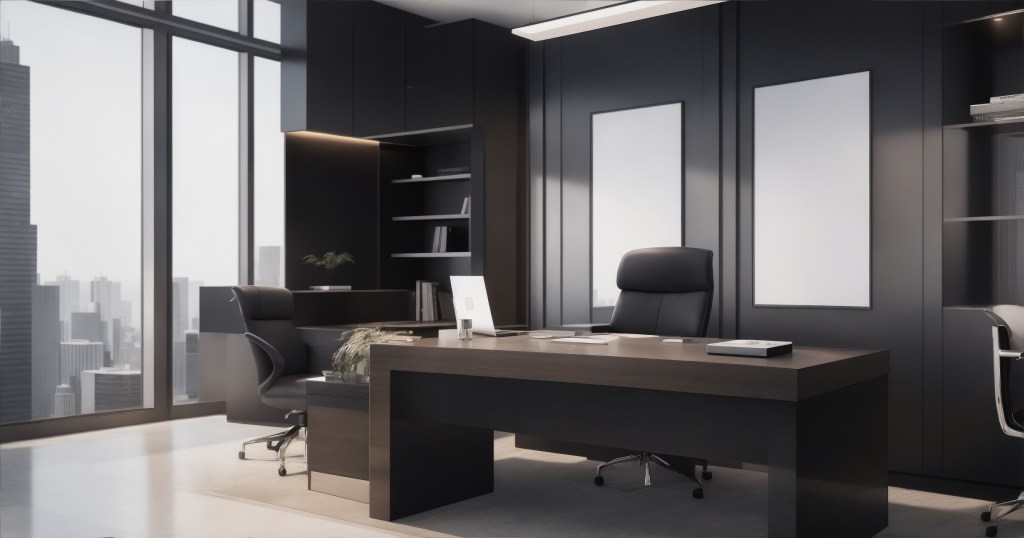
The Executive’s Journey: Across the hall and up on the seventh floor, Sarah, a company executive, enters her private office. The door firmly shuts behind her, offering both a symbolic and physical barrier from the world outside. Her office boasts a large window that showers the room with sunlight and offers a panoramic city view. She has chosen each piece of furniture with care, reflecting both her taste and her stature within the company. A comfortable couch sits in one corner, offering a change of scenery for those moments of reflection or informal chats. Whenever she needs to concentrate or take confidential calls, she can close her door, ensuring undisturbed focus. If she requires any assistance, her assistant sits just outside, ready to field calls, manage schedules, or run errands. And when lunchtime rolls around, she can decide between heading down to a select executive dining room or ordering in.
These contrasting narratives underscore a reality many organizations face: the vast chasm in office experiences between employees and executives. Executives, with their spacious offices, access to resources, and a degree of privacy, often view the office as a haven of productivity and collaboration. They have access to an entire support structure, from assistants who can filter calls and manage schedules to team members immediately available for quick, face-to-face chats. Their position often affords them the privilege of managing their time more flexibly, ducking out for appointments or personal tasks without the scrutiny often reserved for lower-level employees.
Now, consider the shift to a remote setting. For the executive, working from home might mean trading a few of these office conveniences and the immediacy of in-person interactions. Yet, they likely have a dedicated workspace at home, perhaps even mirroring the ambiance and functionality of their corporate office.
In contrast, many employees, especially those who previously navigated the hustle of open floor plans and standard cubicles, discover a world of newfound autonomy at home. For the first time, they might have their own “office” space, even if it’s a corner of their living room. They can control their environment — from lighting and temperature to background noise. They can take short breaks without the fear of prying eyes or judgment, maybe tossing a load of laundry in or playing with a pet. The ability to customize their workspace and routine mirrors the personalization and privacy executives often take for granted in the corporate setting.
This newfound agency in shaping their work environment at home may be why many employees are resistant to returning to their old office setups. The dichotomy, between the personalized comfort of executives and the standardized efficiency offered to employees, is now more evident than ever. The pandemic-induced shift to remote work has, for many, leveled the playing field, bringing into sharp focus the disparities in work experiences based on job roles and hierarchies. This could very well be a driving force behind the polarized opinions on returning to the office.
The Great Divide: Mixed Results in the Return-to-Office Strategies
Navigating the post-pandemic office comeback has been a bit like watching a reality TV show. You’ve got some companies totally nailing it, getting cheers and fist bumps for their forward-thinking moves. Then, there are others, where it feels like every decision has employees raising their eyebrows and whispering in the break room. So, let’s dive deep, take a peek behind the curtain, and check out who’s rocking the return-to-office gig and who’s… well, not.
Riding the Wave of Success:
- Adobe: They’ve harmoniously balanced the scales between home and office life. The company’s decision to let employees split their time between both realms shows a keen understanding of the unique challenges posed by the pandemic, like separation anxiety from beloved pets. As of 2023, Adobe seems to be sailing smoothly with no major shifts to their strategy.
- Airbnb: Their global nod of allowing employees to work from anywhere, without a hit to their paycheck, is arguably the epitome of embracing hybrid work. The approach not only made headlines but also became a testament to Airbnb’s commitment to adaptability.
- DoorDash: Emphasizing flexibility from the outset in 2022, DoorDash recognized that not all teams and roles are the same. Their steadfast dedication to flexible working has remained unwavering.
Hitting the Rocks:
- Goldman Sachs: The banking giant’s firm stance against remote work has proven to be a double-edged sword. As of 2023, the corridors of their HQ have been less bustling than expected, with only half the workforce showing up post their return-to-office announcement.
- Netflix: Reed Hastings’ staunch views against the work-from-home model contrasts sharply with the industry trend. Despite his beliefs, a concrete date for a full return remains up in the air, hinting at possible internal debates or reconsiderations.
- Apple: A titan in tech, yet not immune to the return-to-office dilemma. Despite initial plans for a tri-weekly office routine, Apple has been dancing on a tightrope, with employees on one side advocating for flexibility, and corporate strategies on the other.
Treading the Middle Ground:
- Disney: The magical kingdom faced its share of realities. Despite initially being onboard with the hybrid model, a shift to a stricter four-day office mandate in January 2023 had many employees rallying with a petition, showcasing the challenges even giants face in reading the room.
- Google: The tech behemoth, while introducing a structured hybrid model, has met its share of roadblocks. From controversies surrounding potential pay cuts for wholly remote employees to the bureaucratic hassle of formal applications for extended remote stints, Google’s journey is a testament to the complexities of charting unexplored territories.
The vast disparities in these strategies and their receptions underscore the multi-faceted challenge companies grapple with. The post-pandemic work environment isn’t just about logistics but also about understanding human needs, aspirations, and the ever-evolving dynamics of the professional world. It’s evident that a one-size-fits-all approach doesn’t hold water in these uncharted waters, and the key to success lies in adaptability, empathy, and open dialogue.
Striking the Right Balance: The Perfect Choreography of Remote and In-Office Work
Juggling between remote and in-office work isn’t child’s play; it’s a whole balancing act. And some companies? Well, they’ve managed to perform like seasoned acrobats on this high-wire act of modern employment.
Imagine Sam, whose best work kicks in when the city lights are brightest. These standout companies have grasped these individual working rhythms, making flexibility a cornerstone of their strategy. But it’s more than just giving people a chance to set their schedules. Recall those days when company decisions felt like unexpected plot twists? Those leading the pack have put an end to that script. By championing clear communication, they’ve ensured everyone is reading from the same page.
And here’s something commendable: they don’t just dictate the storyline. They actively invite their team’s perspectives, valuing feedback like gold. It’s as if they’ve got this uncanny ability to sense the narrative’s direction, constantly adapting to keep the story engaging. The rise of hybrid working among these champions highlights their innovative thinking. They’ve proven that productive spaces aren’t limited to office walls. They’re creating dynamic settings, merging the best of both worlds with finesse. On the tech front, they’re pioneers. Imagine seamlessly shifting your workspace from a sunny patio to a vibrant street corner café, all thanks to their state-of-the-art toolkits.
Of course, every strategy has its challenges. Remote work can sometimes feel like a maze, with pitfalls like isolation lurking around. But these trailblazers? They’ve got well-being as their compass, ensuring no one feels lost.Their adaptability is worthy of applause. These companies are agile, nimble, always ready to adjust their strategy based on the changing landscape of the post-pandemic world.
At the heart of their success lies trust. They’re not about micromanaging every task, but empowering teams. There’s a sense of autonomy, and it feels liberating. Yet, with all this autonomy, there’s structure. It’s like having a vast playground with clear guidelines, ensuring everyone plays their part and the team scores.
In a nutshell, these industry leaders have turned the remote vs. in-office debate into a masterclass. For companies still finding their footing, there are certainly pages worth borrowing from their playbook.
Navigating the New Normal: Lessons in Adaptability and Inclusivity
The evolving landscape of work post-pandemic has been nothing short of a grand experiment. From companies riding the wave of innovation to those facing the storms of resistance, it’s clear that adaptability is more than a skill—it’s an imperative. Companies like Adobe, Airbnb, and DoorDash have set compelling precedents with their flexible and inclusive approaches, demonstrating that success in this new era hinges on recognizing the individual while nurturing the collective.
But the journey hasn’t been without its pitfalls. As we’ve seen with organizations like Goldman Sachs and Apple, a rigid stance or misaligned communication can lead to internal friction. The message is clear: the future of work isn’t a one-size-fits-all proposition. It’s a tailored fit, requiring constant feedback, recalibration, and, above all, empathy.
As we reflect on the lessons from these corporate giants, one truth emerges: The key to thriving in this dynamic landscape lies not in resisting change but in embracing it. Whether it’s the freedom of remote work, the camaraderie of in-office days, or a blend of both, the goal remains the same: fostering environments where people can do their best work and feel valued while doing it.
In the grand tapestry of the post-pandemic workplace, companies that prioritize trust, flexibility, and inclusivity stand out. Their stories serve as guiding lights, illuminating a path forward for all organizations aiming to harmonize business objectives with employee well-being. As we chart our courses through these uncharted waters, may we draw inspiration from their successes, learn from their challenges, and above all, champion a culture that puts people at the heart of every decision.



 Abstract Foundations
Leave a comment