
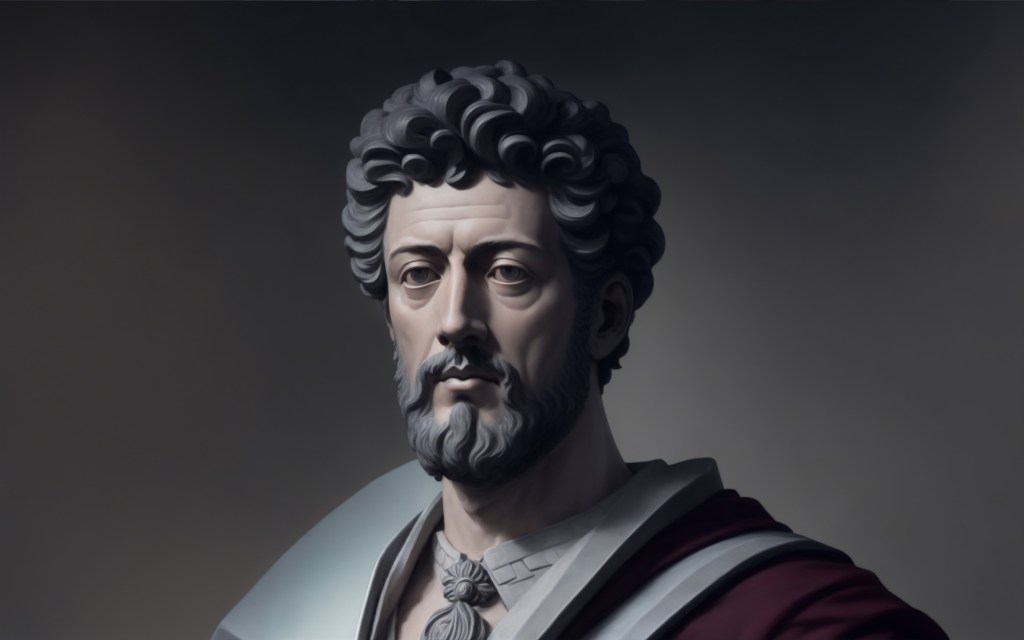
As a professional, as well as someone trying to be a decent human in an often less-than-decent world, I’ve found invaluable insights in various philosophical schools—be it Nietzsche’s assertion of the will to power, Kant’s emphasis on duty and categorical imperatives, or the Socratic emphasis on dialogues. However, Stoicism holds a special place in my heart and in my approach to both business and life.
The core tenets of Stoicism have become my guiding principles when it comes to planning projects, solving problems, and developing solutions. They help me delineate the boundaries of my thoughts, time, and energy, guiding me on where these would be most effectively and healthily invested. More importantly, Stoicism has provided me with a toolset to manage my stress levels, fostering resilience, acceptance, and tranquility amid the turbulent waters of life and business.
In this article, we’ll explore the lives and teachings of three notable Stoic philosophers—Epictetus, Marcus Aurelius, and Seneca—and examine how their wisdom can guide us in the face of today’s digital distractions. Whether you’re an entrepreneur, a freelancer, a solutions architect, or simply someone trying to navigate the relentless pace of our digital age, I hope the Stoic philosophy, as it has for me, offers you valuable insights and practical strategies.
Jeff
Recommended Listening:
In our hyperconnected world, digital distractions are an ever-present challenge. The incessant pings, notifications, and updates can disrupt focus, cloud judgment, and ultimately derail productivity. While technology has undoubtedly made our lives more comfortable, the digital noise it brings often seems to control our days rather than enhance them. But what if we could turn to ancient wisdom to help us navigate these modern distractions?
Enter Stoicism, a philosophy hailing from ancient Greece and Rome, that emphasized virtue, wisdom, and self-control as the means to achieve inner peace, irrespective of external circumstances. Guided by renowned thinkers like Epictetus, Marcus Aurelius, and Seneca, Stoicism can offer a framework to help us manage the pervasive digital distractions that pervade our professional and personal lives.
This blog post will explore how the stoic principles can help us regain control over our attention, foster resilience in the face of constant digital interruptions, and lead a more focused and productive life in the digital age. From learning to differentiate between what we can and cannot control, to reframing our reactions to distractions, let’s delve into the Stoic’s guide to silencing the digital noise.
An Overview of Stoic Philosophy
Before we delve into the teachings of Epictetus, Marcus Aurelius, and Seneca, it’s essential to understand the foundational principles of Stoicism. This philosophy, which originated in Athens in the early 3rd century BC, has several core tenets:
Virtue is the highest good: The Stoics believed that a good life—one filled with happiness and fulfillment—lies in living virtuously. Virtue, in the Stoic sense, is about living in alignment with nature and reason, characterized by wisdom, courage, justice, and temperance.
Some things are in our control, others are not: This is perhaps the most well-known Stoic principle. Stoics argue that we should focus our energies on what we can control—our thoughts, attitudes, and actions—and accept what we can’t control, such as external events or other people’s behavior. This mindset fosters resilience and tranquility.
Our judgments shape our reality: Stoics maintained that it’s not external events themselves that cause us distress, but our judgments about them. By changing our perspective and judgments, we can navigate adversity and maintain inner peace.
We are part of a larger community: Despite its emphasis on personal virtue and self-control, Stoicism isn’t a self-centered philosophy. Stoics saw themselves as part of a broader community and emphasized the importance of acting for the common good.
These principles have a timeless quality to them, providing guidance on how to lead a good life, irrespective of the era or context. In the next section, we’ll explore how these Stoic tenets can be applied to our digital lives, providing much-needed wisdom and tranquility amid the noise of the 21st century.
The Stoic Trio: Epictetus, Marcus Aurelius, and Seneca – Pioneers of Resilience and Tranquility
Stoicism, with its timeless principles, was shaped by the teachings of three intellectual giants: Epictetus, Marcus Aurelius, and Seneca. Each one of them made significant contributions to Stoic philosophy, applying it in different contexts and offering valuable insights that continue to resonate with us today.
Epictetus (c.50 – c.135 AD)
Born into slavery in the Roman Empire, Epictetus was later freed and established a reputable Stoic school in Nicopolis. He believed that philosophy should not just be discussed but lived. His teachings primarily revolve around the dichotomy of control, highlighting that peace comes from focusing on things within our control and accepting what is not. Epictetus’s major works include the ‘Discourses’ and the ‘Enchiridion’ (Handbook), both of which were penned down by his student Arrian. In today’s society, his principles are evident in various self-help and resilience-training programs, and his dichotomy of control is central to Cognitive Behavioral Therapy, a leading psychological treatment method.
Marcus Aurelius (121 – 180 AD)
Marcus Aurelius, one of the ‘Five Good Emperors’ of the Roman Empire, is often dubbed the ‘Philosopher King.’ He wrote ‘Meditations,’ a personal diary that encompasses his reflections on life, death, duty, and nature. His work, intended for personal guidance and self-improvement, has become an enduring text on Stoic philosophy. Today, Aurelius’ teachings on virtue, duty, and serenity in the face of adversity inspire leaders worldwide and underscore resilience training and mindfulness practices.
Seneca (c.4 BC – AD 65)
A statesman, dramatist, and philosopher, Lucius Annaeus Seneca served as an advisor to Emperor Nero. His works, like ‘Letters from a Stoic’ and ‘On the Shortness of Life,’ provide practical advice on topics ranging from handling criticism to managing time effectively. In contemporary society, Seneca’s views on wealth and power and his emphasis on a simple, ethical life have found resonance in minimalist lifestyles and the global push towards ethical consumerism and business practices.
Despite the passage of time, the writings and teachings of Epictetus, Marcus Aurelius, and Seneca continue to impact the way we think, behave, and live. Their Stoic principles, when applied to digital distractions, offer a robust framework to navigate the overwhelming wave of information and communication in the 21st century.
Stoicism and Digital Distractions: An Unlikely Match Made in Heaven
In our modern world, digital distractions are a ubiquitous part of our lives. From the incessant notifications on our smartphones, the allure of social media, to the incessant barrage of emails, we are continually pulled away from focused, meaningful work and into the vortex of quick, instant gratification. It’s here where Stoic principles, as taught by Epictetus, Marcus Aurelius, and Seneca, can offer valuable insights on how to navigate this new age of distraction.
Epictetus: Understanding What’s in Our Control
Epictetus’s dichotomy of control can be a powerful tool for dealing with digital distractions. He taught that we must distinguish between things that are within our control (our thoughts, beliefs, actions) and those outside of it (everything else). When faced with a constant stream of notifications and digital demands, we can decide how to react to them. We can’t control the existence of these distractions, but we can control how much we let them disrupt our lives.
Marcus Aurelius: Mindfulness in the Digital Age
Marcus Aurelius emphasized mindfulness and reflection, a concept highly applicable to our interaction with digital technology. Amid the clutter of digital stimuli, we often mindlessly react rather than thoughtfully respond. By practicing mindfulness, we can better engage with our devices. Rather than habitually checking emails or social media, we pause, reflect on the urge, and then decide whether it’s the best use of our time. This approach aligns with Aurelius’s philosophy of thoughtful, purposeful action.
Seneca: Valuing Our Time
Seneca, who so wisely spoke about the shortness of life, would likely be dismayed at how frivolously we often spend our time in the digital age. His writings remind us to value our time and question whether hours spent scrolling through social media or mindlessly gaming truly contribute to our life’s quality. Seneca’s teachings encourage us to consider if our digital activities align with our larger goals and values, and if they don’t, to have the courage to change our habits.
These principles aren’t a call to renounce all digital conveniences but rather to interact with them in a more purposeful, conscious manner. By applying the wisdom of the Stoics, we can navigate digital distractions more effectively, ensuring they serve us rather than us serving them.
Practical Stoic Strategies for Navigating Digital Distractions
Understanding Stoic principles can certainly give us perspective, but what does it mean to apply these teachings practically in our day-to-day lives? Here are some strategies inspired by Stoicism that can help us manage digital distractions more effectively:
- Mindful device usage (Inspired by Marcus Aurelius):
Before unlocking your phone or opening your laptop, take a moment to consider your intention. Why are you reaching for your device? Is it out of boredom, habit, or a genuine need? By being mindful of our intentions, we can ensure our technology use aligns with our true needs and not simply a response to external stimuli.
- Create digital-free zones and times (Inspired by Seneca):
As Seneca suggested, we should value our time as our most precious resource. Establishing specific zones in your home or specific times during the day as ‘digital-free’ can help us be more intentional with our time and avoid unnecessary distractions.
- Control your digital environment (Inspired by Epictetus):
Understanding what’s in our control means we can customize our digital environment to our advantage. This could mean turning off unnecessary notifications, using apps that block distracting websites during work hours, or setting limits on how much time you spend on certain apps.
- Reflect on your digital habits (Inspired by all three Stoics):
Regular reflection can help us understand our digital habits better. Are they serving our greater purpose or distracting us from it? Do we feel more anxious or stressed after spending time on social media? These reflections can guide us in making necessary changes to our digital habits.
By applying these Stoic-inspired strategies, we can leverage the benefits of digital technology without letting it control our lives. It’s a balance that requires ongoing effort and adjustments, but with practice, we can become better navigators in the sea of digital distractions.
The Modern Stoic: Adapting Ancient Philosophy to the Digital Age
While the Stoics didn’t face distractions like social media notifications, incessant emails, or addictive smartphone apps, the principles they espoused can offer profound guidance for navigating these modern challenges.
The primary focus of Stoic philosophy is not to discard distractions entirely, as they are often inevitable, but to cultivate a state of mind that is less perturbed by them. It’s about creating mental fortitude and resilience to stay focused amidst chaos.
1. Use technology, don’t be used by it:
Remember, technology is a tool. Just like the Stoics viewed wealth or reputation, technology is preferred indifferent — it is neither good nor bad. It becomes good when used properly and vice versa. Be the user, not the used. Maintain control over your devices rather than allowing them to control you.
2. Embrace digital minimalism:
Stoicism is often about less is more, about focusing on what’s essential. Apply this principle to your digital life by keeping only the apps and notifications that serve a purpose and contribute positively to your life. Declutter your digital environment just as a Stoic would suggest decluttering your mind.
3. Practice digital temperance:
Stoicism promotes moderation and self-control. Just as Epictetus advised his students to practice temperance in their desires and actions, so too should we practice temperance in our digital consumption.
4. Find tranquility amidst digital chaos:
Marcus Aurelius often wrote about finding peace amidst the chaos of Roman life. The same can be applied to our digital lives. Amidst the noise and distractions of the digital world, we can find tranquility by focusing on the present moment and not allowing ourselves to be swept away by the digital tide.
By adopting a Stoic mindset, we can approach our digital lives with more intention and mindfulness, transforming potential distractions into tools for connection, learning, and growth. Just as the Stoics did in their time, we can turn challenges into opportunities for personal development and cultivate a peaceful mind amidst the chaos.
The Path of the Digital Stoic
Navigating the digital world in the 21st century is a new kind of challenge that ancient philosophers never had to confront. But that doesn’t mean that their wisdom is outdated. Indeed, the Stoics offer us potent insights that can help us find calm amidst the digital storm.
By adopting a Stoic perspective, we can bring intentionality to our interactions with technology, distinguishing between those things we can control (our thoughts, attitudes, and reactions) and those we cannot (the never-ending stream of emails, notifications, and news updates). This doesn’t mean retreating from the digital world, but rather engaging with it more mindfully, exercising digital temperance, and finding tranquility amidst the chaos.
Just as Epictetus, Marcus Aurelius, and Seneca guided their contemporaries through the complexities of life in the Roman Empire, their teachings can guide us today. The world around us may have changed dramatically, but the core of human nature and the challenges we face remain much the same.
In the end, it’s not about eliminating digital distractions entirely – an impossible task – but rather learning how to navigate them effectively. And in doing so, we might just find that the path of the digital stoic not only leads to increased productivity and focus, but also to a deeper sense of peace and fulfillment in our day-to-day lives.
Before you go, here’s a little homework. Try to apply one Stoic principle in your digital life this week, and observe the changes it brings. Just remember, as Marcus Aurelius once said, “The obstacle is the way.”
As always, thanks for reading. If you enjoyed this post, don’t forget to share it with your network. Until next time, stay Stoic!



 Abstract Foundations
Leave a comment